

I believe that ultimately the Supreme Court will uphold Trump’s nominations of Lindsey Halligan and Alina Habba, ultimately the motion by Letitia James and James Comey will fail
Posted on | October 24, 2025 | No Comments
Precedents for Interim U.S. Attorneys Succeeding One Another and Serving Beyond 120 DaysUnder 28 U.S.C. § 546, the Attorney General (AG) may appoint an interim U.S. Attorney for up to 120 days while a permanent nominee awaits Senate confirmation. If that term expires without confirmation, the district court may appoint (or reappoint) an interim to serve indefinitely until the vacancy is filled. Succession—where one interim replaces another—typically occurs via resignation, removal, or court intervention before or after the 120-day limit. The Federal Vacancies Reform Act (FVRA, 5 U.S.C. § 3345 et seq.) provides an additional pathway for “acting” successors (e.g., the first assistant) for up to 210 days, which can chain with the 120-day interim period.Historical precedents show this has occurred routinely since the 1986 amendments to § 546, often to bridge delays in confirmation. Courts have upheld extensions and successions as constitutional under the Appointments Clause, viewing interim U.S. Attorneys as “inferior officers.” Below are key examples, grouped by mechanism. These draw from judicial rulings, OLC opinions, and documented cases; successive AG appointments are rarer and more contested than court extensions.1. Succession via District Court Appointment or Reappointment (Indefinite Term After 120 Days) District courts frequently extend or replace AG-appointed interims, allowing total service far beyond 120 days. This has been the norm since 1898, when courts first gained this authority.
|
Case/District
|
Year
|
Details
|
Total Service Beyond 120 Days
|
|---|---|---|---|
|
Southern District of New York (Geoffrey Berman)
|
2018–2020
|
After Preet Bharara’s firing, deputy Joon Kim served ~10 months as acting (FVRA). AG Sessions then appointed Berman as interim for 120 days; SDNY judges reappointed him indefinitely. Berman served ~2.5 years total until his 2020 removal.
|
~870 days (indefinite court extension).
|
|
District of New Jersey (Craig Carpenito)
|
2018–2021
|
AG appointed Carpenito interim for 120 days amid Senate delays. NJ district judges reappointed him indefinitely despite opposition from Sens. Booker and Menendez. Served until Biden confirmation.
|
~1,000+ days (indefinite court extension).
|
|
District of South Dakota (dispute resolution)
|
2005–2006
|
First AG interim (Mikal Hansen) resigned after ~90 days; AG appointed second interim (Tim Storlie) for 120 days. Court disputed the second appointment and named its own (Tina Holmes) indefinitely, but executive challenged it. Resolved via compromise; Holmes served ~1 year total.
|
~365 days (court extension post-succession).
|
|
District of Columbia (general precedent)
|
1986–present
|
Courts have appointed interims for 1–2 years during delays; e.g., post-1986 reforms, judges routinely extended deputies indefinitely until confirmation.
|
Varies; often 300–700 days.
|
Category: Uncategorized
Comments
Leave a Reply
EVIDENCE AGAINST OBAMA — YouTube Indiana Trial of Obama !
Petition the White House to institute Edward Snowden, National Whistleblower – Patriots against Government Corruption Day

 OrlyTaitzEsq.com
TAITZ REPORT


Official Facebook
IMPORTANT NOTICES – PLEASE READ!
Historic DVD Now Available!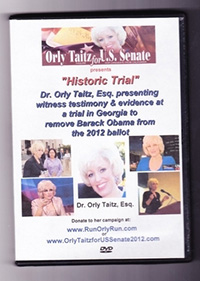 DVD of the historic trial in GA and DVD of a historic testimony in NH, where evidence was provided showing Obama using a forged birth certificate and a stolen social security number. The DVDs are in a beautiful commemorative case with personal autographs from attorney Dr. Orly Taitz $22.50 each +$2.50 for shipping and handling.
---------
To order these DVDs, donate $25.00 by credit card on the website RunOrlyRun.com and email orly.taitz@gmail.com with you name and address. Or send a $25.00 check with your name and address to: Orly Taitz for US Senate 2012, 29839 Santa Margarita ste 100, RSM, CA 92688.
DVD of the historic trial in GA and DVD of a historic testimony in NH, where evidence was provided showing Obama using a forged birth certificate and a stolen social security number. The DVDs are in a beautiful commemorative case with personal autographs from attorney Dr. Orly Taitz $22.50 each +$2.50 for shipping and handling.
---------
To order these DVDs, donate $25.00 by credit card on the website RunOrlyRun.com and email orly.taitz@gmail.com with you name and address. Or send a $25.00 check with your name and address to: Orly Taitz for US Senate 2012, 29839 Santa Margarita ste 100, RSM, CA 92688.
Advertisement / Sponsors
 29839 Sta Margarita Pkwy,
Ste 100
Rancho Sta Margarita, CA 92688
orly.taitz @gmail. com
(949) 766-7687

--------------------------------------
 Videography by Barbara Rosenfeld
--------------------------------------

Bumper Sticker
$9.99 thru PayPal--------------------------------------

--------------------------------------Orly Taitz Photo Collections