

The upcoming U.S. Supreme Court case Louisiana v. Callais may give GOP 19 more seats, as the states will no longer be forced to create special minority districts
Posted on | October 9, 2025 | No Comments
The upcoming U.S. Supreme Court case Louisiana v. Callais (consolidated with Robinson v. Callais), which stems from challenges to Louisiana’s congressional redistricting map under Section 2 of the Voting Rights Act (VRA). The case questions whether creating majority-minority (specifically majority-Black) districts to remedy racial vote dilution violates the 14th or 15th Amendments by making race the predominant factor in redistricting. Oral arguments occurred in March 2025, with the Court ordering additional briefing in August 2025; a decision is expected during the 2025-26 term (likely by mid-2026).A ruling favoring the challengers (non-Black voters and Louisiana officials) could invalidate the state’s current map—which includes two majority-Black districts out of six total—and potentially broaden to limit VRA Section 2’s use nationwide. This would enable Republican-led state legislatures to redraw maps without VRA-mandated protections for minority voting power, shifting districts toward GOP-favored configurations.Expected Impact: Up to 19 Additional GOP House SeatsAccording to a joint report from voting rights groups Fair Fight Action and Black Voters Matter Fund (released October 2025), a pro-challenger ruling could trigger mid-decade redistricting in multiple states, allowing Republicans to redraw up to 19 congressional districts currently held under VRA protections. This would disproportionately affect Democratic-leaning minority coalitions, potentially securing GOP House majorities “for a generation” amid narrow current margins (Republicans hold a slim majority post-2024 elections).These shifts wouldn’t eliminate all Democratic seats in affected states but would reduce their delegations overall. The report identifies the following states and approximate seat impacts based on VRA-covered districts:
|
State
|
Current VRA-Protected Democratic Seats at Risk
|
Projected GOP Net Gain
|
Notes
|
|---|---|---|---|
|
Alabama
|
1 (new majority-Black district from 2023 SCOTUS ruling)
|
+1
|
Could revert to original map diluting Black voters in the 7th District.
|
|
Georgia
|
1–2 (coalition districts)
|
+1–2
|
Impacts Atlanta-area seats; GOP could crack minority concentrations.
|
|
Louisiana
|
1 (2nd majority-Black district)
|
+1
|
Directly at issue; would restore one GOP seat, e.g., affecting Rep. Cleo Fields’ district.
|
|
North Carolina
|
3–4 (majority-minority or coalition districts)
|
+3–4
|
Targets Raleigh-Durham and Charlotte areas; could flip seats like the 6th or 13th.
|
|
Texas
|
4–5 (Hispanic-majority districts)
|
+4–5
|
Focus on border and urban areas (e.g., Houston, San Antonio); risks seats like the 15th or 34th.
|
|
Florida
|
1–2 (Hispanic/Black coalitions)
|
+1–2
|
Affects Miami-Orlando regions; could target the 24th or 27th Districts.
|
|
Total
|
11–15
|
Up to 19
|
Range accounts for partial redraws or court challenges; full impact if VRA Section 2 is effectively neutered.
|
This analysis assumes aggressive GOP-led redraws (already underway in some states via mid-cycle processes) and minimal Democratic countermeasures. However, Democrats could attempt protective redraws in blue strongholds, though opportunities are limited. Voting rights advocates warn this would exacerbate racial gerrymandering, while GOP officials frame it as restoring “race-neutral” districting.The case’s outcome could also influence ongoing VRA challenges in states like South Carolina and Arkansas, amplifying the national ripple effects.
Comments
Leave a Reply
EVIDENCE AGAINST OBAMA — YouTube Indiana Trial of Obama !
Petition the White House to institute Edward Snowden, National Whistleblower – Patriots against Government Corruption Day

 OrlyTaitzEsq.com
TAITZ REPORT


Official Facebook
IMPORTANT NOTICES – PLEASE READ!
Historic DVD Now Available!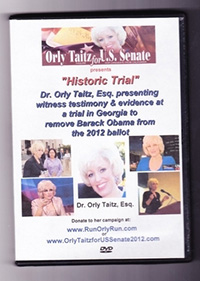 DVD of the historic trial in GA and DVD of a historic testimony in NH, where evidence was provided showing Obama using a forged birth certificate and a stolen social security number. The DVDs are in a beautiful commemorative case with personal autographs from attorney Dr. Orly Taitz $22.50 each +$2.50 for shipping and handling.
---------
To order these DVDs, donate $25.00 by credit card on the website RunOrlyRun.com and email orly.taitz@gmail.com with you name and address. Or send a $25.00 check with your name and address to: Orly Taitz for US Senate 2012, 29839 Santa Margarita ste 100, RSM, CA 92688.
DVD of the historic trial in GA and DVD of a historic testimony in NH, where evidence was provided showing Obama using a forged birth certificate and a stolen social security number. The DVDs are in a beautiful commemorative case with personal autographs from attorney Dr. Orly Taitz $22.50 each +$2.50 for shipping and handling.
---------
To order these DVDs, donate $25.00 by credit card on the website RunOrlyRun.com and email orly.taitz@gmail.com with you name and address. Or send a $25.00 check with your name and address to: Orly Taitz for US Senate 2012, 29839 Santa Margarita ste 100, RSM, CA 92688.
Advertisement / Sponsors
 29839 Sta Margarita Pkwy,
Ste 100
Rancho Sta Margarita, CA 92688
orly.taitz @gmail. com
(949) 766-7687

--------------------------------------
 Videography by Barbara Rosenfeld
--------------------------------------

Bumper Sticker
$9.99 thru PayPal--------------------------------------

--------------------------------------Orly Taitz Photo Collections