

What do you do, when the other side breaches the contract?”
Posted on | December 3, 2010 | 4 Comments
| Old Man |
Submitted on 2010/12/03 at 1:02pm
Orly, why do you keep talking about this? As a constitutional lawyer, you know that states are prohibited from levying tarriffs. You are the only person in the entire country who disputes this |
It is time for every state to follow the North Dakota model and create a state bank and impose state tax on all the foreign products |
Explanation from Orly:
A few of Obama supporters, who post on this site asked me this question. I guess I need to respond and clarify and explain myself better.
If you recall, the states had their own system of tariffs. Remember the begining of the Scarlet letter? Where was it set? in a tariffs house, colony’s customs office.
When the Union was formed, the states entered into an agreement, whereby they gave up their right to collect tariffs, in exchange for the Feds collecting the tariffs, which were supposed to cover the expenses of the federal government.
What happened in 1994, when U.S. ruling elite sold out to a small group of oligarchs and dismantled the whole system of tariffs? They undercut the states. They unilaterally breached the agreement they had with the states. It came to the point, where the Feds lost significant revenues and became more of a burden for the states and the populace, as the Gatt/WTO, trade with the third World countries with defacto slave labor completely undermined the states and they had no means to compensate. As one side breached the covenantof good faith and fair dealing and breached the agreement, the other side is free to seek multiple remedies to compensate. CA and NY tried to remedy the situation with excessive taxation- it didn’t work, as high taxation is repressive and ills business. On the other hand, the states are free to compensate by lowering and completely dismantling the state tax on the U.S. produced products, while keeping the taxation on the imports. So, you de fact create tariffs on imports, but you call it something else, such as tax brake on the domestic products.
Is it clear now? Did I explain it well enough now?
Comments
4 Responses to “What do you do, when the other side breaches the contract?””
Leave a Reply
EVIDENCE AGAINST OBAMA — YouTube Indiana Trial of Obama !
Petition the White House to institute Edward Snowden, National Whistleblower – Patriots against Government Corruption Day

 OrlyTaitzEsq.com
TAITZ REPORT


Official Facebook
IMPORTANT NOTICES – PLEASE READ!
Historic DVD Now Available!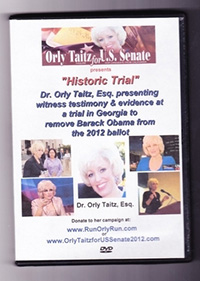 DVD of the historic trial in GA and DVD of a historic testimony in NH, where evidence was provided showing Obama using a forged birth certificate and a stolen social security number. The DVDs are in a beautiful commemorative case with personal autographs from attorney Dr. Orly Taitz $22.50 each +$2.50 for shipping and handling.
---------
To order these DVDs, donate $25.00 by credit card on the website RunOrlyRun.com and email orly.taitz@gmail.com with you name and address. Or send a $25.00 check with your name and address to: Orly Taitz for US Senate 2012, 29839 Santa Margarita ste 100, RSM, CA 92688.
DVD of the historic trial in GA and DVD of a historic testimony in NH, where evidence was provided showing Obama using a forged birth certificate and a stolen social security number. The DVDs are in a beautiful commemorative case with personal autographs from attorney Dr. Orly Taitz $22.50 each +$2.50 for shipping and handling.
---------
To order these DVDs, donate $25.00 by credit card on the website RunOrlyRun.com and email orly.taitz@gmail.com with you name and address. Or send a $25.00 check with your name and address to: Orly Taitz for US Senate 2012, 29839 Santa Margarita ste 100, RSM, CA 92688.
Advertisement / Sponsors
 29839 Sta Margarita Pkwy,
Ste 100
Rancho Sta Margarita, CA 92688
orly.taitz @gmail. com
(949) 766-7687

--------------------------------------
 Videography by Barbara Rosenfeld
--------------------------------------
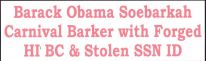
Bumper Sticker
$9.99 thru PayPal--------------------------------------

--------------------------------------Orly Taitz Photo Collections







December 4th, 2010 @ 7:14 am
Dr. Taitz — can you cite to any scholarly writings adcvancing this view? Or any case law? It sounds contrary to the concepts of federalism to me.
December 4th, 2010 @ 7:44 am
this is uncharted territory, as GATT / WTO was signed in 1994 and I believe it was ratified in 1995. Keep in mind it took some time for China to build ts infrastructure and to us to see the full extend of devastation this treaty caused.
by the way, I believe there is a site called “one million Europeans to repeal the EU”, something like this. There is a strong push to repeal the EU, as sconomic devastation in Europe is similar to US
December 4th, 2010 @ 8:06 am
It is relevant to note that Texas charges an import tariff on alcoholic beverages. If you buy alcohol in Mexico and cross into Texas, you will be directed by customs to the Texas state tariff collection site.
December 4th, 2010 @ 12:40 pm
You are wrong Alec. All states may charge excise taxes on any given good. Fo example, Ohio can have an excise tax on all alcohol over 40 proof purchased in Ohio.
Your example I believe is incorrect-US Customs officials would not be enforcing Texas state law. The customs duty you pay coming in from Mexico is a federal law and not limited to simply Texas (you pay it if you fly into Chicago, Houston, or anywhere else). It is part of declaring your goods when you come in, and governs the importation of all alcohol from any foreign source (Mexico, Canada, or anywhere else).
I am not 100% on taxation, but state and municipal excise taxes are not to be confused with import duties — import duties which are solely governed by federal law.