
Posted on | November 7, 2025 | No Comments


SCOTUS Expectations on Trump’s TariffsThe U.S. Supreme Court heard oral arguments on November 5, 2025, in Trump v. V.O.S. Selections, Inc., challenging President Trump’s use of the 1977 International Emergency Economic Powers Act (IEEPA) to impose sweeping global tariffs on nearly all imports (e.g., 10–25% on most countries, higher on adversaries like China). Lower courts ruled these exceeded presidential authority, as tariffs are a congressional power under the Constitution. A decision is expected by early 2026.The case is closely divided, with a “coin toss” likelihood of upholding the tariffs (per legal experts like former Solicitor General Elizabeth Prelogar). Key factors:
- Pro-uphold arguments: Conservative justices (e.g., Thomas, Alito, Gorsuch) may defer to executive power on national security/foreign policy, viewing tariffs as “regulation” of imports amid threats like trade deficits ($1.2T in 2024), fentanyl trafficking, and migration. Trump appointees Gorsuch and Kavanaugh lean toward broad presidential flexibility; even Justice Kagan (Obama appointee) has shown deference in past cases. Administration officials, including Treasury Secretary Scott Bessent, express “confidence” in victory, citing historical precedents like Nixon’s 1971 tariffs.
- Against upholding: Several justices (including conservatives like Roberts and Barrett) expressed skepticism during arguments, questioning if IEEPA allows “taxation” without explicit congressional delegation. Liberals (Sotomayor, Kagan, Jackson) emphasized constitutional limits. Disruptions from refunds ($100B+ collected in 2025) could sway pragmatically, but experts predict 70–80% chance of partial or full strike-down.
A partial win (upholding targeted tariffs on China/Mexico for drugs/migration but striking global ones) is possible, preserving some revenue (~$300B projected by end-2025) and policy leverage.Trump’s Plan BThe White House has prepped contingencies, viewing IEEPA as ideal for speed but not irreplaceable. If struck down, Trump has stated he’ll develop a “game two plan” to reimpose duties quickly, potentially via these statutes (already in groundwork):
- Section 301 (Trade Act of 1974): Targets unfair practices (e.g., IP theft); used against China in Trump’s first term. Allows broad tariffs after investigation (months-long), no time limit.
- Section 232 (Trade Expansion Act of 1962): National security-based (e.g., steel/aluminum); quick but requires Commerce Dept. probe (45–270 days).
- Section 338 (Tariff Act of 1930): Up to 50% on discriminatory countries; no investigation needed, unlimited duration—floated as a direct “Plan B” by Bessent. Untested but potent for leverage.
- Other tools: Section 201 safeguards (injury-based, temporary) or reciprocal tariffs under new executive orders. These could cover 80–90% of current revenue but slow negotiations (e.g., recent China deal).
Refunds to importers would process via Customs (potentially $750B–$1T if delayed), causing short-term chaos, but aides say tariffs “stay in place long-term” under alternatives. Trading partners expect minimal policy shift.


Comments
Leave a Reply
EVIDENCE AGAINST OBAMA — YouTube Indiana Trial of Obama !
Petition the White House to institute Edward Snowden, National Whistleblower – Patriots against Government Corruption Day

 OrlyTaitzEsq.com
TAITZ REPORT


Official Facebook
IMPORTANT NOTICES – PLEASE READ!
Historic DVD Now Available!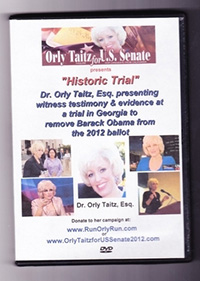 DVD of the historic trial in GA and DVD of a historic testimony in NH, where evidence was provided showing Obama using a forged birth certificate and a stolen social security number. The DVDs are in a beautiful commemorative case with personal autographs from attorney Dr. Orly Taitz $22.50 each +$2.50 for shipping and handling.
---------
To order these DVDs, donate $25.00 by credit card on the website RunOrlyRun.com and email orly.taitz@gmail.com with you name and address. Or send a $25.00 check with your name and address to: Orly Taitz for US Senate 2012, 29839 Santa Margarita ste 100, RSM, CA 92688.
DVD of the historic trial in GA and DVD of a historic testimony in NH, where evidence was provided showing Obama using a forged birth certificate and a stolen social security number. The DVDs are in a beautiful commemorative case with personal autographs from attorney Dr. Orly Taitz $22.50 each +$2.50 for shipping and handling.
---------
To order these DVDs, donate $25.00 by credit card on the website RunOrlyRun.com and email orly.taitz@gmail.com with you name and address. Or send a $25.00 check with your name and address to: Orly Taitz for US Senate 2012, 29839 Santa Margarita ste 100, RSM, CA 92688.
Advertisement / Sponsors
 29839 Sta Margarita Pkwy,
Ste 100
Rancho Sta Margarita, CA 92688
orly.taitz @gmail. com
(949) 766-7687

--------------------------------------
 Videography by Barbara Rosenfeld
--------------------------------------

Bumper Sticker
$9.99 thru PayPal--------------------------------------

--------------------------------------Orly Taitz Photo Collections