usurper regime goes after campaign violations, while hiding Obama’s forged and fraudulently obtained IDs
Posted on | February 27, 2012 | No Comments
Election Law
L.A. Attorney Reaches Plea Deal Over Campaign Finance Violations
·
o Subscription Required
Tuesday, February 28, 2012 | by Amanda Bronstad
Criminal Practice/Election Law/Legal Profession
L.A. Attorney Reaches Plea Deal Over Campaign Finance Violations
Amanda Bronstad
New York Law Journal
02-28-2012
LOS ANGELES – Attorney Pierce O’Donnell has reached a revised plea deal with federal prosecutors that would require him to serve 60 days in prison but allow him to retain his California bar license.
The deal was the second reached in a campaign finance violations case against the noted trial attorney. On Nov. 14, U.S. District Judge James Otero in Los Angeles rejected the sentencing portion of the original deal, which called for a prison term of six months and a $20,000 fine. He concluded that prison was too harsh a punishment, attributing Mr. O’Donnell’s criminal acts to a “lapse of judgment.” He also found the fine “woefully insufficient.”
During a Jan. 17 hearing, Judge Otero took an impending trial date off his calendar and urged both sides to reach a new agreement or send their case to another judge.
A status hearing was scheduled for March 5.
Mr. O’Donnell’s attorney, Frederick Friedman, of counsel in the Los Angeles office of Jones Day, did not return a call for comment. Thom Mrozek, spokesman for the U.S. attorney’s office in Los Angeles, declined to comment.
“Defendant, and his counsel specifically acknowledge and agree that the agreed-upon sentence is just, fair, and appropriate, and that it takes into account both the seriousness of defendant’s criminal conduct and any and all of defendant’s personal circumstances both prior to and after his commission of the charged offenses,” Mr. Friedman and Assistant U.S. Attorney Dennis Mitchell wrote in the stipulation.
If Judge Otero rejects the sentence again, both sides would ask that the case be transferred to a magistrate judge, who would determine whether to approve the arrangement. The government reserved the option to pursue the charges against Mr. O’Donnell should that judge reject the deal.
Mr. O’Donnell would retain his California bar license, given that he would plead guilty to the same two misdemeanor charges at issue in the original agreement. Specifically, Mr. O’Donnell would admit that he reimbursed employees of his Los Angeles law firm, now called O’Donnell & Associates, and others who contributed $26,000 in 2003 to the presidential campaign of former U.S. Sen. John Edwards, D.-N.C.
Prosecutors originally charged him with two felonies under §441f of the Federal Election Campaign Act. A conviction on either count could have led to automatic suspension of Mr. O’Donnell’s license.
Mr. O’Donnell would be placed on supervised release for one year. During that time, he would perform 200 hours of community service, plus another 300 hours in the 16 months following his supervised release period.
@|Amanda Bronstad is a reporter for The National Law Journal. She can be contacted at abronstad
Comments
Leave a Reply
EVIDENCE AGAINST OBAMA — YouTube Indiana Trial of Obama !
Petition the White House to institute Edward Snowden, National Whistleblower – Patriots against Government Corruption Day

 OrlyTaitzEsq.com
TAITZ REPORT

Official Facebook
IMPORTANT NOTICES – PLEASE READ!
Historic DVD Now Available!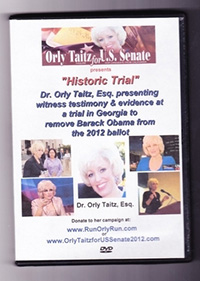 DVD of the historic trial in GA and DVD of a historic testimony in NH, where evidence was provided showing Obama using a forged birth certificate and a stolen social security number. The DVDs are in a beautiful commemorative case with personal autographs from attorney Dr. Orly Taitz $22.50 each +$2.50 for shipping and handling.
---------
To order these DVDs, donate $25.00 by credit card on the website RunOrlyRun.com and email orly.taitz@gmail.com with you name and address. Or send a $25.00 check with your name and address to: Orly Taitz for US Senate 2012, 29839 Santa Margarita ste 100, RSM, CA 92688.
DVD of the historic trial in GA and DVD of a historic testimony in NH, where evidence was provided showing Obama using a forged birth certificate and a stolen social security number. The DVDs are in a beautiful commemorative case with personal autographs from attorney Dr. Orly Taitz $22.50 each +$2.50 for shipping and handling.
---------
To order these DVDs, donate $25.00 by credit card on the website RunOrlyRun.com and email orly.taitz@gmail.com with you name and address. Or send a $25.00 check with your name and address to: Orly Taitz for US Senate 2012, 29839 Santa Margarita ste 100, RSM, CA 92688.
Advertisement / Sponsors
 29839 Sta Margarita Pkwy,
Ste 100
Rancho Sta Margarita, CA 92688
orly.taitz @gmail. com
(949) 766-7687

--------------------------------------
 Videography by Barbara Rosenfeld
--------------------------------------
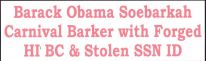
Bumper Sticker
$9.99 thru PayPal--------------------------------------
--------------------------------------Orly Taitz Photo Collections